The Noise Went Quiet

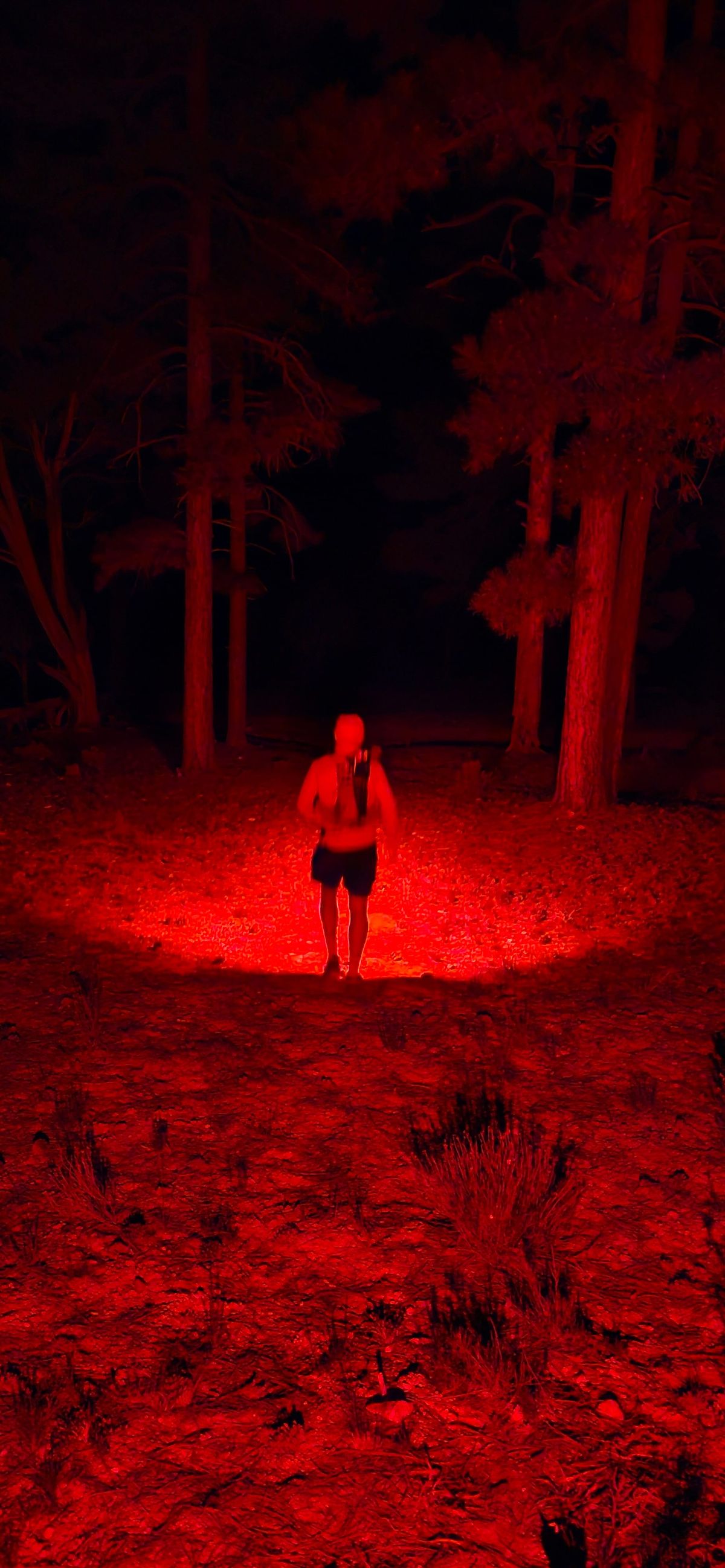
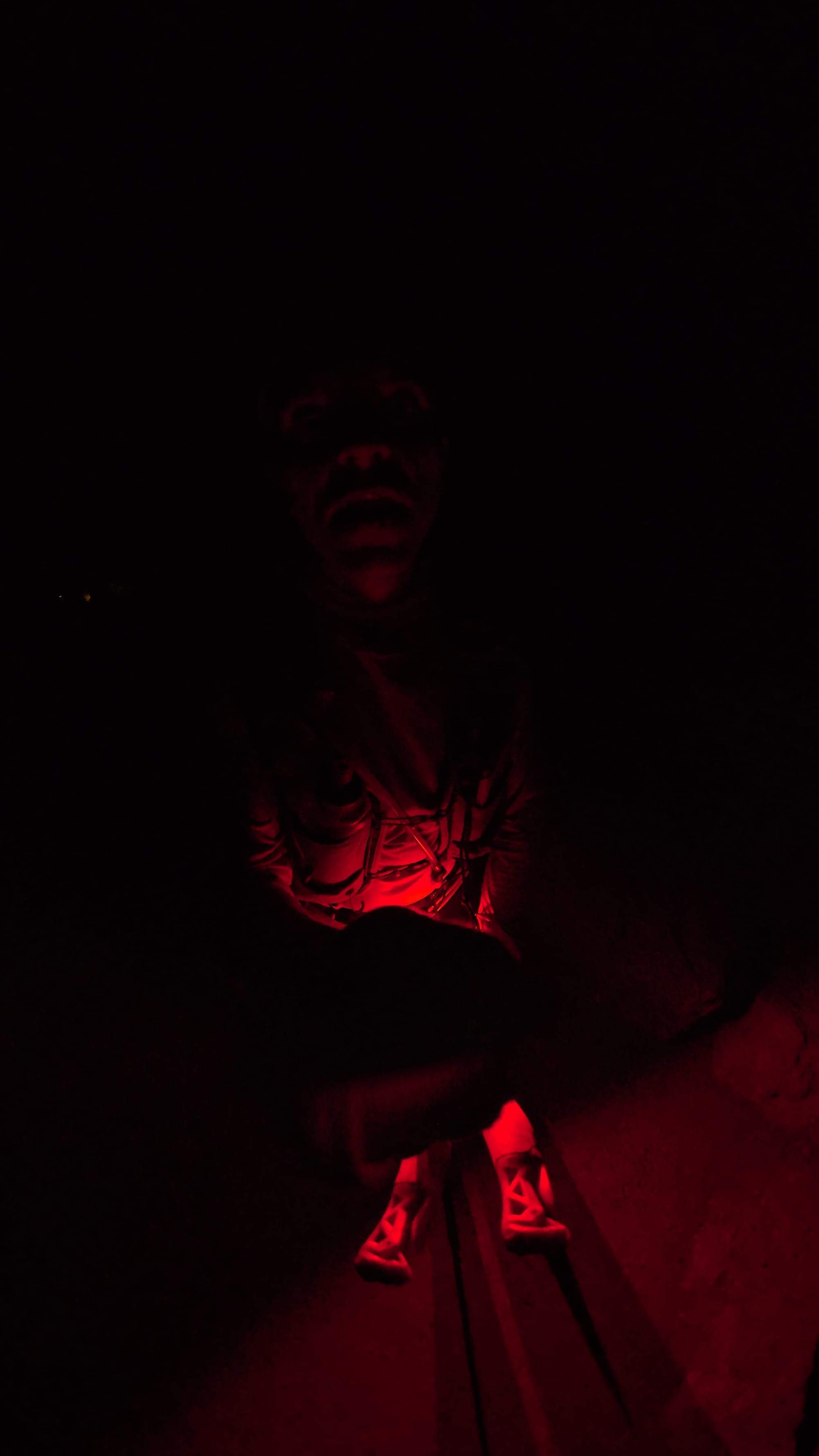
We started before sunrise beneath red lights and cold air, walking silently toward Hermit’s Rest while most of the South Rim was still asleep.
The entire village felt suspended in time. Empty shuttle stops. Pine trees moving in the dark. The strange calm that exists right before something big begins.
At 4:36 a.m., standing near the rim before descending, I remember hearing the canyon breathing.
Not metaphorically. Literally.
The wind moved rhythmically through the rock in deep pulses, almost like the landscape itself was inhaling and exhaling. Gusts would build somewhere below us in the darkness and rise upward through the canyon walls before fading again into silence.
It felt alive.
And somehow it also felt like it was pulling us inward.
The sound that stopped us at the rim before sunrise.
There was a moment where the scale of what we were about to do finally became real. Not in mileage or elevation numbers, but emotionally. The canyon suddenly stopped feeling like scenery and started feeling ancient. Indifferent. Vast enough to make human plans feel very small.
At 4:00 a.m., the canyon doesn’t feel real yet. It feels imagined.
That illusion disappears the moment you step onto Hermit Trail.
The Grand Canyon has a way of immediately reducing life down to essentials. Water. Calories. Shade. Movement. Judgment. Patience.
Everything else becomes background noise.
Which is probably why this effort affected me as deeply as it did.
For months after being diagnosed with multiple sclerosis, I had quietly started measuring myself against my symptoms. Not consciously at first, but gradually. Constantly evaluating eye movement. Heat tolerance. Fatigue. Wondering whether my body was changing permanently beneath me in ways I couldn’t yet fully understand.
MS creates uncertainty in strange ways. Sometimes the symptoms themselves are manageable. What becomes harder is the anticipation. The constant questioning. The mental noise.
What if this gets worse?
What if this is the new normal?
What if I can’t trust my body anymore?
I carried those thoughts into the canyon whether I admitted it or not.
And yet, somewhere between the darkness of Skeleton Point and the furnace-like heat of the Tonto platform, something strange happened.
The noise went quiet.
Not because the canyon was easy. It absolutely was not.
The heat felt alive by midday. Not dramatic desert heat in the abstract, but something physical and oppressive that constantly demanded respect. There were stretches where progress slowed to a crawl and entire miles where every decision revolved around preserving energy and staying cool enough to continue functioning properly.
The route itself was relentless.
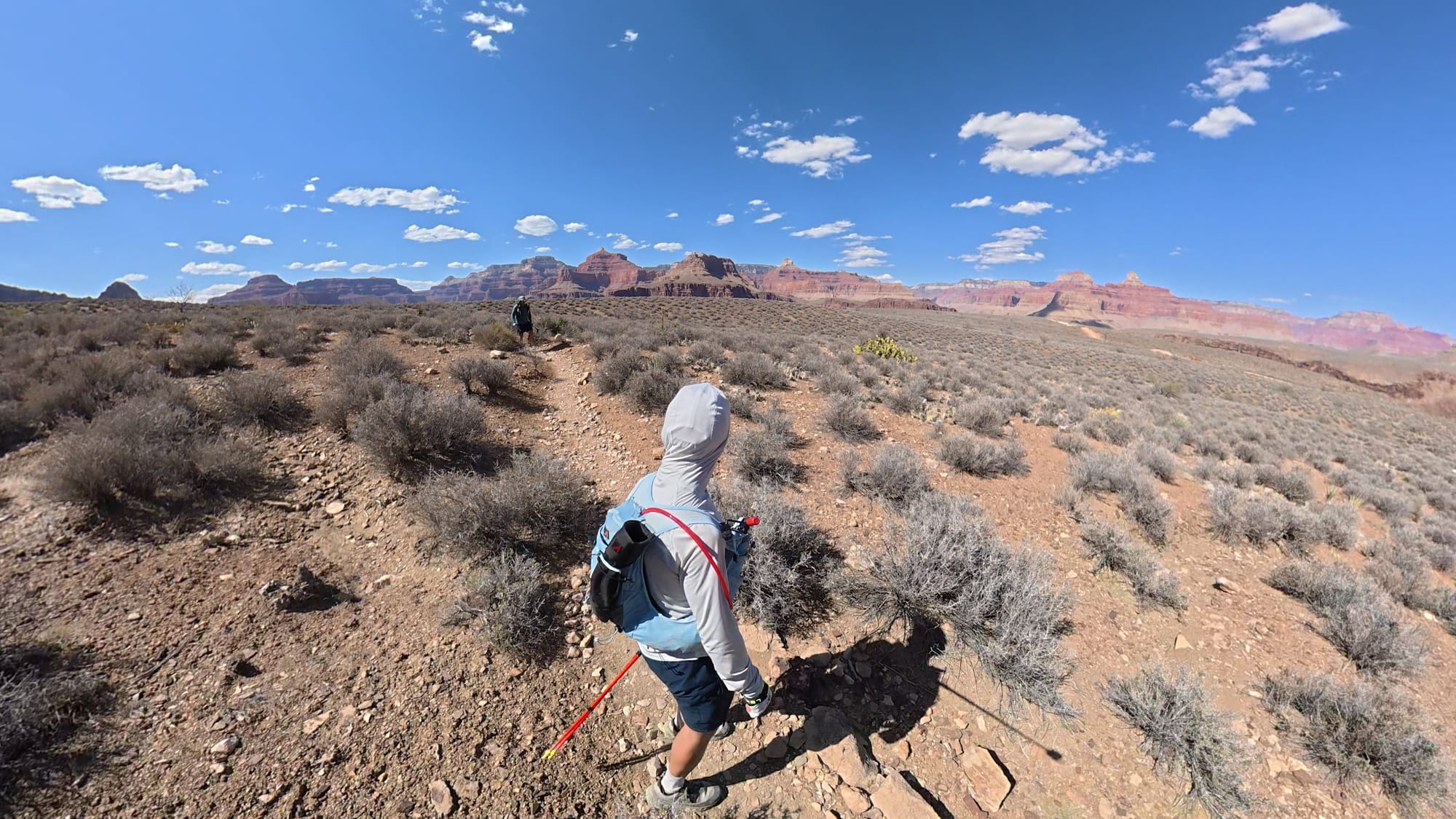
What looks like a short run across the plateau often turns into miles. Somewhere ahead, Greg eventually comes into view, reduced to a tiny speck against the scale of the canyon.
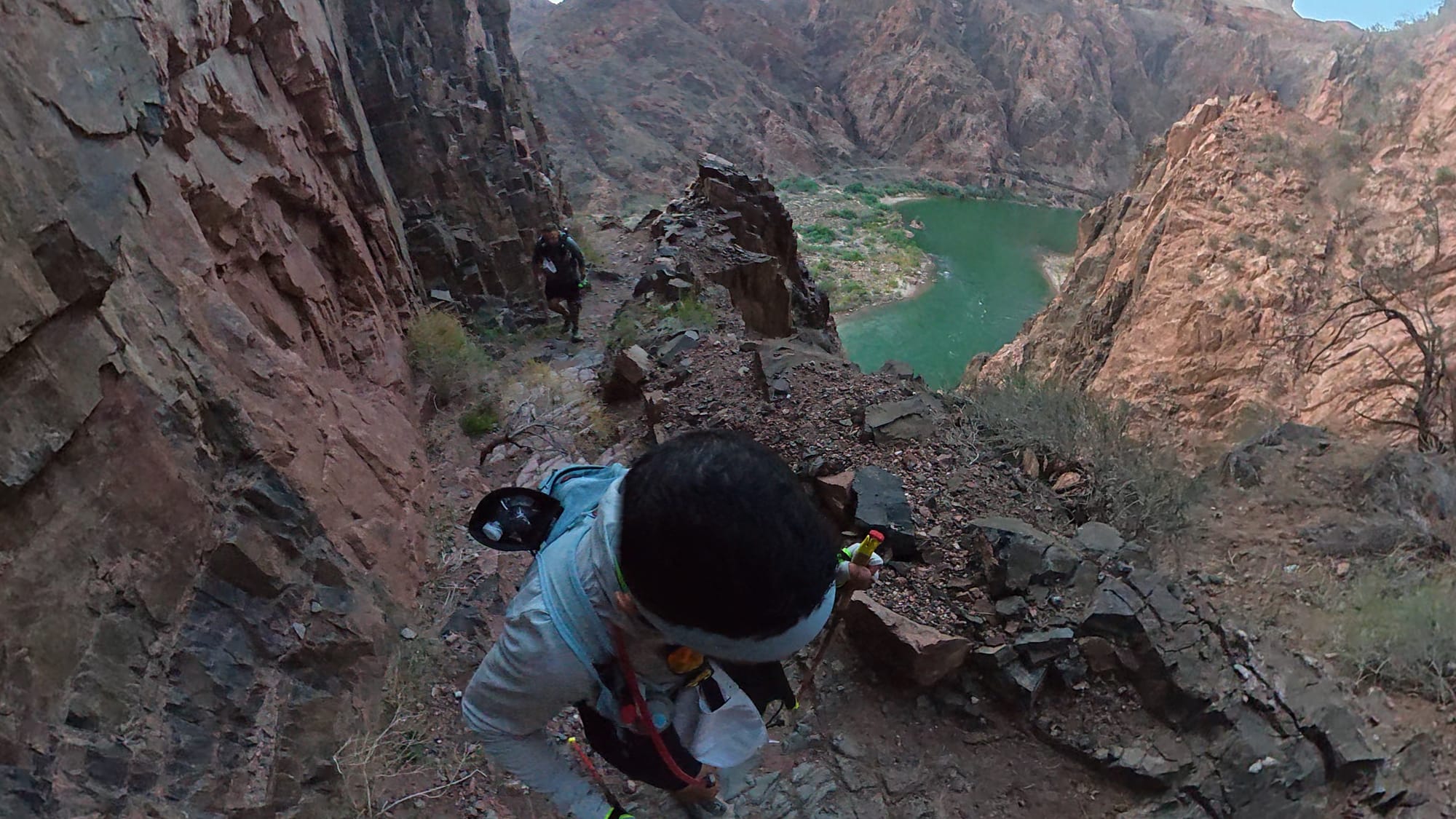
We descended Hermit Trail into massive silence as the sun began touching the canyon walls. The scale is difficult to explain unless you’ve stood there yourself. Photographs flatten it. Your brain struggles to process distances correctly. Layers of rock begin to feel almost geological rather than visual—less like scenery and more like time itself exposed in front of you.
As the hours passed, the canyon stopped feeling scenic and started feeling elemental.
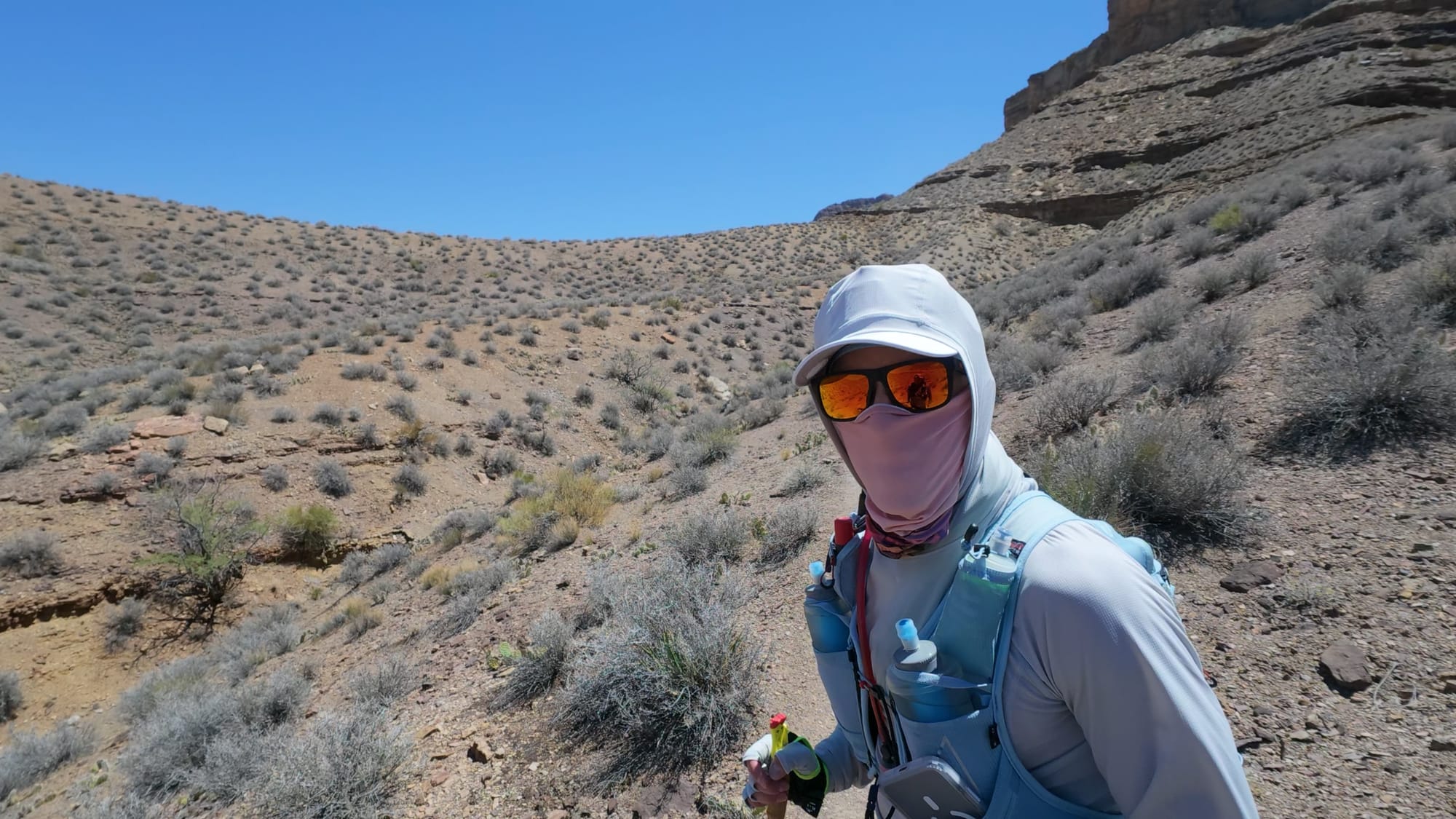
We managed water carefully. Fuel carefully. Electrolytes carefully. Tiny mistakes become larger the longer you remain exposed out there. I realized quickly how much little details mattered: airflow across skin, shaded sections of trail, pacing discipline early, staying ahead of dehydration before it announced itself.
At one point, I genuinely questioned whether we should egress early.
By then, the canyon had begun collecting its debt.
The heat was taking its toll. Water hadn’t always been where we expected it to be. We had already spent hours managing small deficits before they became large ones. My own fatigue was growing, and I could feel some of my MS symptoms beginning to creep back into the conversation.
What made the moment memorable wasn’t that I felt strong.
I didn’t.
I was overheating. Fatigued. Working through my own symptoms and doubts. The canyon was collecting from both of us.
By the time we reached Havasupai Gardens, it felt less like a campground and more like a sanctuary.
After hours on the exposed Tonto platform, surrounded by rock, heat, and increasingly precious water, the sudden appearance of shade felt almost surreal. Cottonwoods stretched overhead. Cold water rushed through the creek. The air itself seemed different. Cooler. Softer.
Looking back, I think we needed that psychologically as much as physically.
The canyon had spent the better part of a day stripping things away. Havasupai Gardens was the first place that felt like it was giving something back.
When we reached Havasupai Gardens, Greg told me he thought we should exit via Bright Angel.
There wasn’t any debate.
There wasn’t any convincing.
There wasn’t any disappointment.
I simply said, “Let’s make a meal right now and reassess in a little while.”
That was it.
No judgment.
No pressure.
No attachment to the original plan.
Years ago in flight school, they taught us a concept called Safety of Flight.
When someone says, “Knock it off,” the discussion is over.
You stop what you’re doing.
You level the wings.
You return to base.
Questions come later, after everyone is safely on the ground.
The principle sounds obvious, but it’s amazing how often ego interferes with it.
I didn’t think about it at the time, but that’s essentially what we were doing at Havasupai Gardens.
The route had become secondary.
The people had become primary.
We sat.
We ate.
We drank.
We waited.
After a while, Greg said maybe there was a forty percent chance he’d want to continue.
“Okay,” I said.
No judgment.
A little later, after more food, more water, and some attention to hot spots and blisters, he said maybe it was sixty percent.
“Okay.”
Still no judgment.
We weren’t in a hurry.
The canyon wasn’t going anywhere.
What mattered was making a good decision rather than a fast one.
A few days later, Greg told me something I didn’t expect.
He said the reason he eventually felt comfortable continuing wasn’t because I convinced him.
It was because I didn’t.
He felt safe because there was no pressure to perform, no pressure to push through, and no fear of letting me down.
And listening to him, I realized how often judgment becomes its own hazard.
Sometimes the safest thing you can do for another person is create enough space for them to be honest.
Not with you.
With themselves.
And somewhere during those hours in darkness and wind, I noticed something else that felt unexpectedly profound.
Chaos may never truly leave us.
Not the external kind, anyway.
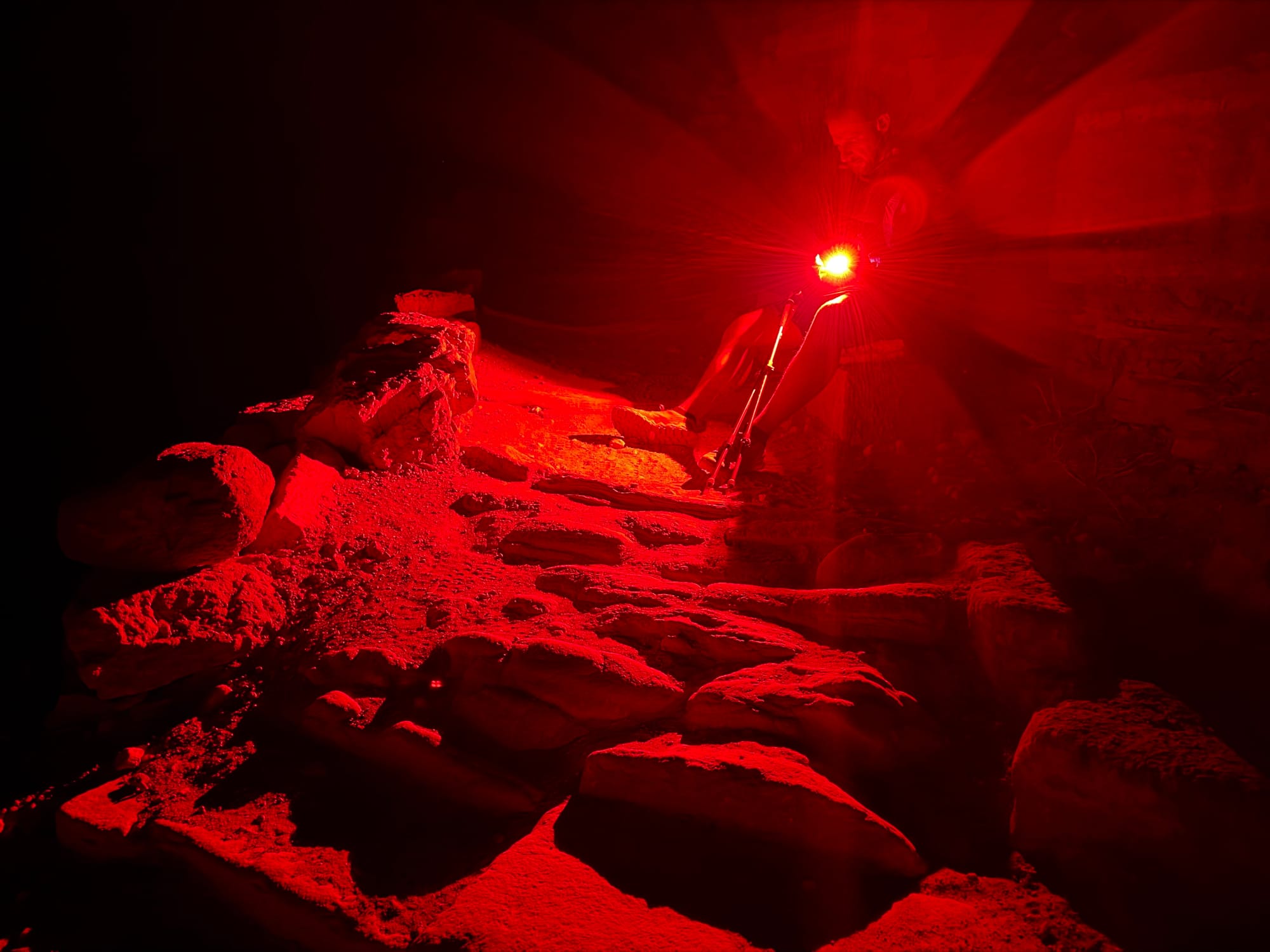
The canyon winds were reaching well over 60 miles per hour in places, moving rhythmically through the rock like the landscape itself was breathing. At one point near Skeleton Point, I accidentally walked into a restroom hidden in the darkness because I genuinely couldn’t distinguish structures from trail. Minutes later, I made another wrong turn and suddenly realized how easy it would have been to slowly drift toward the edge of a drop-off without fully recognizing it in the dark abyss surrounding us.
Nearly twenty hours in, fatigue and 60 mph winds made even an outhouse look like the trail.
Objectively, those moments should have frightened me.
But they didn’t.
And that surprised me.
For so long after my diagnosis, I think I unconsciously believed peace would only come if uncertainty disappeared first. If symptoms stabilized. If the future became predictable again. If the chaos stopped.
But standing there in the darkness, surrounded by wind and exposure and very real consequences, I realized something simpler.
The chaos may endure.
The uncertainty may endure.
But I still have a choice in how I meet it.
Even then, I felt calm.
I remember continuing a quiet prayer to my parents as we moved through the canyon. And strangely, it wasn’t a prayer asking for protection or safety or rescue.
It was gratitude.
And maybe an apology too.
Especially to my dad.
After he passed away, I always carried this feeling that I was supposed to help take care of my mom better than I had. That somehow I hadn’t fully held up my end of the bargain after he was gone.
Somewhere in that darkness, with the canyon breathing around us, the prayer became less about fear and more about acknowledgment. A tribute. A conversation that probably should have happened much earlier.
The canyon has a strange way of removing distraction until only the things that actually matter remain.
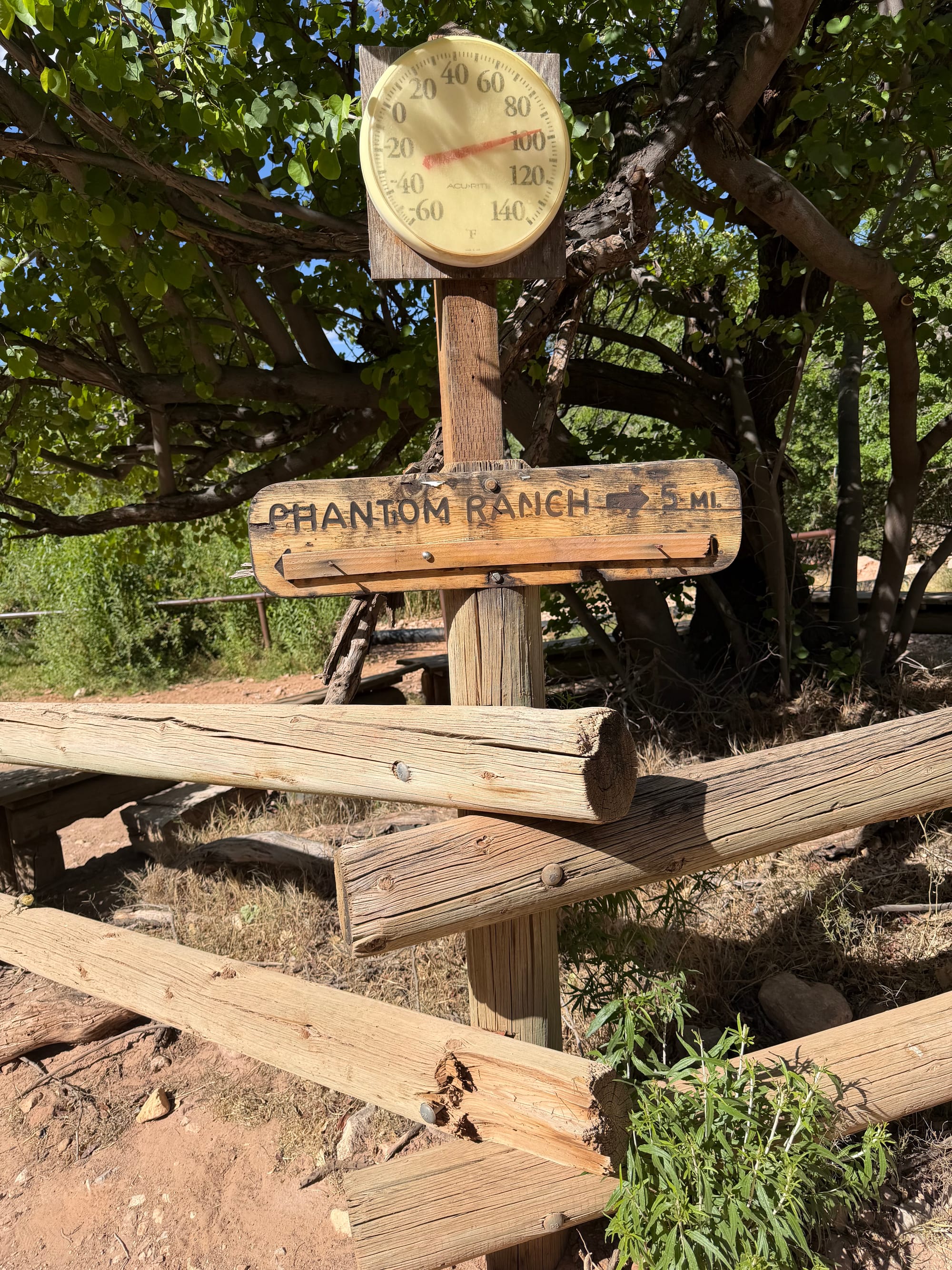
We eventually reached Phantom Ranch after what felt like an entirely separate lifetime lived inside the canyon.
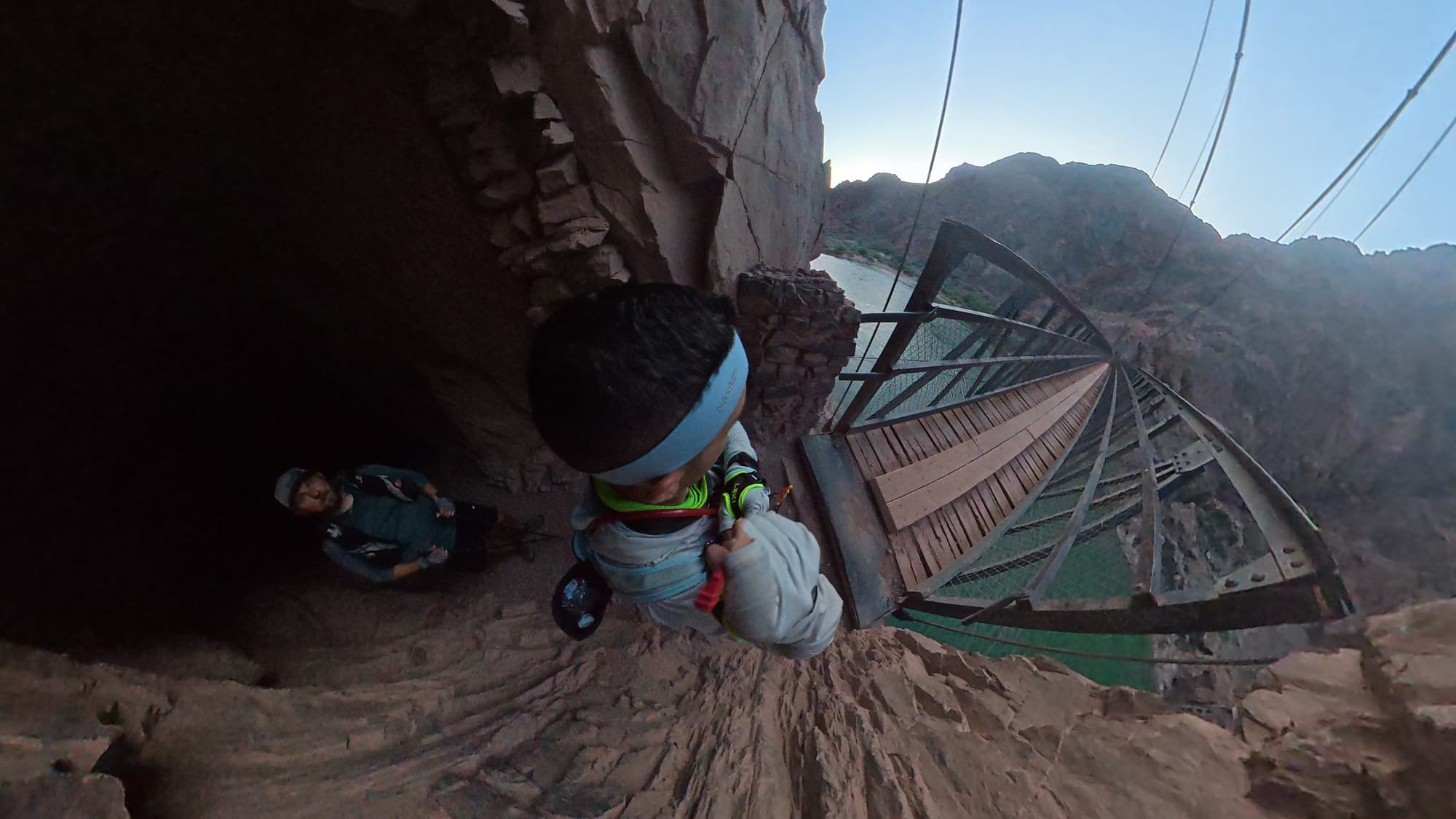
And somehow, after all those hours, after all that heat and fatigue, something unexpected happened to me physically.
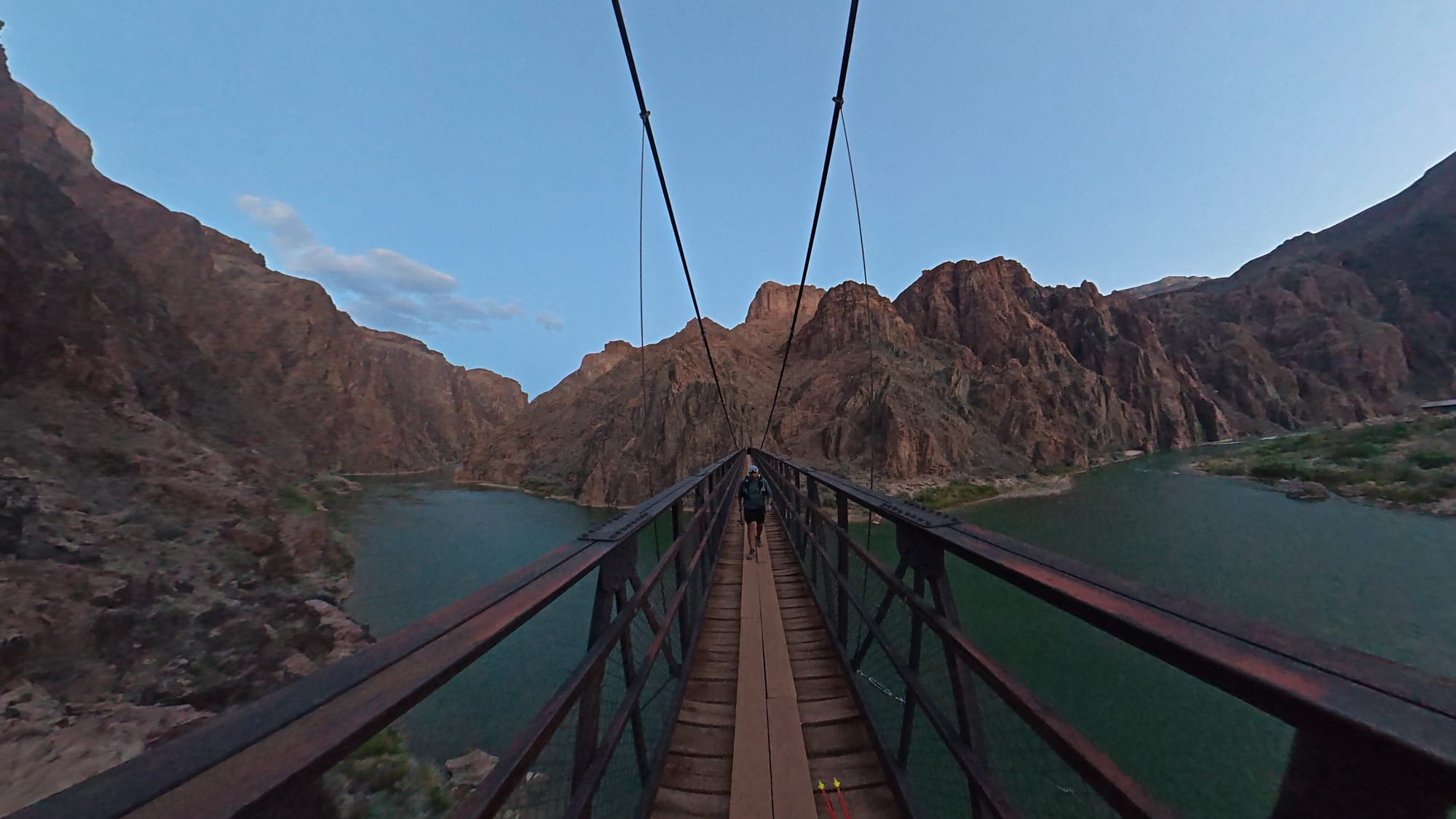
I realized my MS symptoms had faded into the background.
Not cured. Not gone. But irrelevant for a while.
No obsessive checking of eye movement.
No fixation on whether my body was normal.
No spiraling thoughts about the future.
Just movement.
Breathing.
Forward.
That surprised me more than anything else the entire day.
There was another moment later, climbing South Kaibab in darkness, where I discovered something else I wasn’t expecting: I still had another gear left.
That realization hit me emotionally in a way I still haven’t fully processed.
For months, so much of my internal world had revolved around limitation, uncertainty, and adaptation. Quietly wondering what had changed. Quietly wondering what might eventually disappear.
And then suddenly, after nearly twenty hours in the Grand Canyon, my body responded by doing the opposite of what I feared.
It accelerated.
Not recklessly. Not explosively. But steadily. Smoothly. Purposefully.
The poles stopped feeling like equipment and started feeling like extensions of movement itself. Each plant became momentum. Rhythm. Problem solving. Forward progress simplified into repetition.
Step.
Plant.
Breathe.
Repeat.
I had expected the canyon to expose weakness.
Instead, it exposed capacity.
That doesn’t mean the experience was clean or perfect. It certainly wasn’t. There were moments where judgment became difficult. Moments where fatigue distorted perspective. Moments where continuing required uncomfortable honesty about risk, consequences, and energy reserves.
But maybe that’s precisely why the experience mattered.
The canyon strips away performance.
Out there, nobody cares about pace charts or social media or image management. The environment is too indifferent for that. Eventually all that remains is honesty: how prepared you were, how well you adapt, how calm you stay when things become uncertain, and whether you can continue making good decisions after your body and mind are exhausted.
I think that’s what I’ll remember most.
Not the mileage.
Not the elevation.
Not even the suffering.
I’ll remember the stillness.
For one long day inside the Grand Canyon, the noise in my head disappeared.
And for the first time in a long time, I stopped thinking about what my body might eventually become and simply appreciated what it was still capable of doing right now.