The Day I Could See Sound

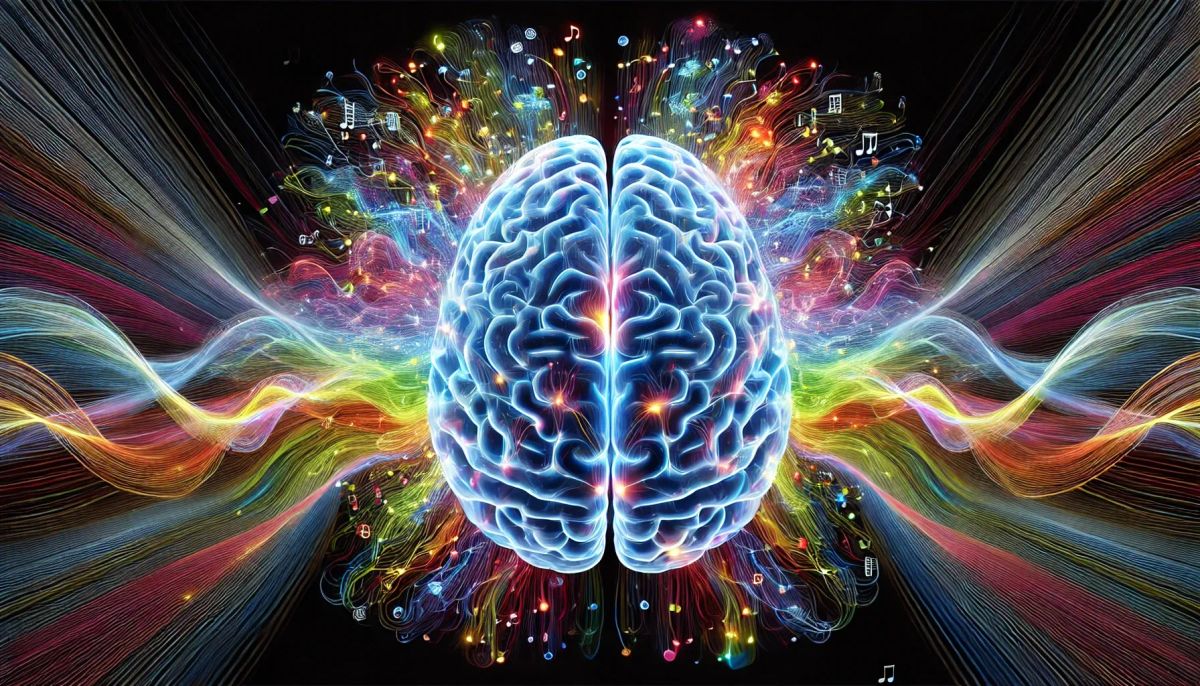
Two days after the ER told me it was Bell’s Palsy —
two days before I understood it was an MS relapse —
I was certain I could see loud sounds.
Not metaphorically.
Visually.
When a door shut too hard, my field of vision seemed to vibrate. When someone spoke sharply, the air shimmered. It wasn’t color. It wasn’t shapes. It was more like the world itself reacted to noise.
It lasted an entire day.
And I didn’t tell anyone.
Because how exactly do you say,
“I think I can see sound,”
without sounding unstable?
So I did what many rational adults do when something strange happens inside their own head: I minimized it. I labeled it stress. Fatigue. Anxiety. I pushed it down so thoroughly that, for a while, I almost convinced myself it hadn’t happened.
Then it stopped.
Which made it easier to ignore.
Months later, lying inside an MRI machine while metal pounded inches from my skull, the memory resurfaced. The sound. The vibration. The quiet panic I had swallowed.
Only this time, I had context.
Multiple sclerosis damages myelin — the fatty insulation wrapped around nerve fibers. Myelin isn’t cosmetic. It allows electrical signals to travel quickly and cleanly along axons. Strip away some of that insulation, and the signal still moves — but less reliably. Less efficiently. Sometimes unpredictably.
Add inflammation to that system, and thresholds change.
The brain is not built in sealed compartments. Hearing and vision are processed in distinct regions, but they communicate constantly. Under normal conditions, those boundaries are tight. Under inflammatory stress, they can loosen.
Sensory cross-talk becomes possible.
The experience wasn’t mystical. It wasn’t psychiatric. It wasn’t imagination running wild.
It was circuitry under load.
The most unsettling part of that day wasn’t the vibration itself. It was the doubt. The internal accusation that I might be inventing something that didn’t fit my identity.
I am analytical. Grounded. I work with data. I do not hallucinate tremors in the air.
Except the brain does not care about identity. It cares about ion channels, conduction velocity, temperature, inflammation.
The phenomenon resolved because the inflammatory storm settled.
That matters.
Psychosis doesn’t politely arrive for 24 hours and leave without residue. Inflammation can.
There is a particular relief in naming something correctly. Not because it makes the memory less strange — but because it restores trust in your own perception.
I didn’t imagine it.
I experienced a nervous system temporarily misfiring.
And if I’m honest, the relief is heavier than the fear ever was.
Because what frightened me most wasn’t the vibration.
It was the possibility that I couldn’t trust my own mind.
Now I understand something I didn’t then: the brain is not fragile glass. It’s adaptive circuitry. During a relapse, the wiring hums differently. Sometimes that hum spills across boundaries.
For one day, I could see sound.
Not because I was losing my mind.
Because my nervous system was fighting a storm.
And now I know the difference.